There are three Ancient Yews in the churchyard of St Cuthbert’s Beltingham, which are likely the oldest and largest in the north east of England. The Parochial Church Council (PCC) is the custodian of the trees and is working with the Ancient Yew Group and The Ancient Tree Forum to develop a project to understand, manage, share and protect the social, cultural and environmental value of these trees and their mostly undisturbed ecosystems.
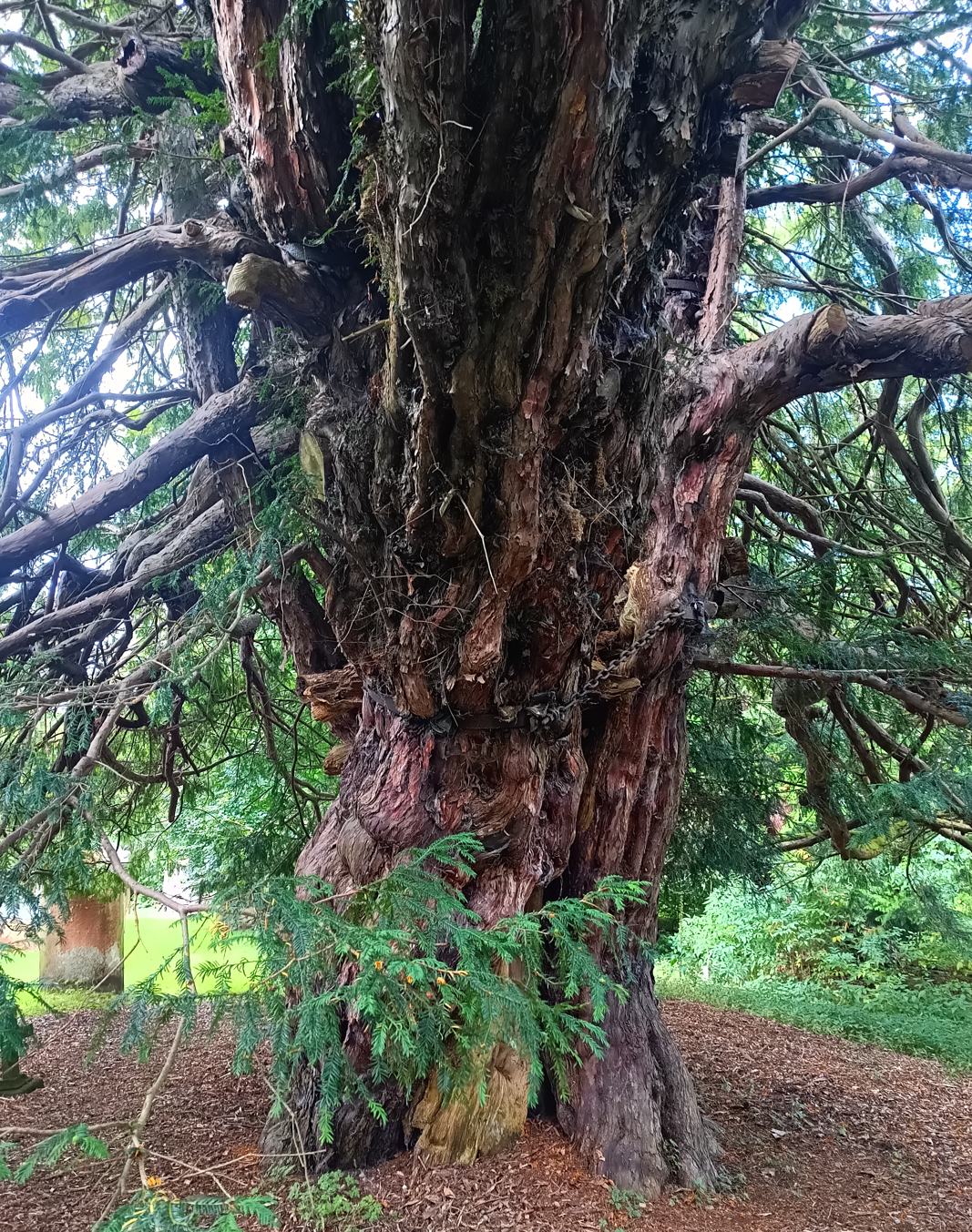
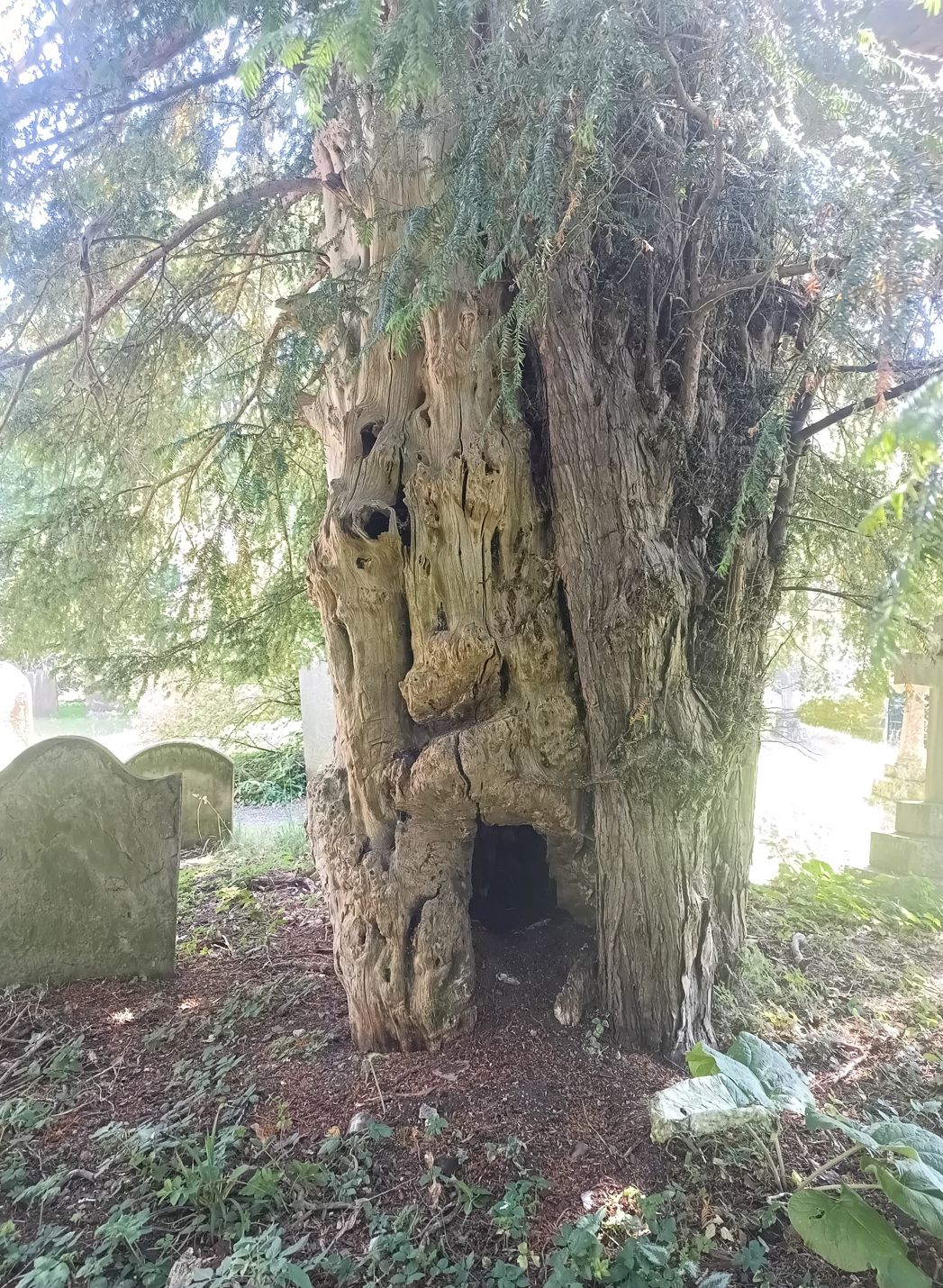
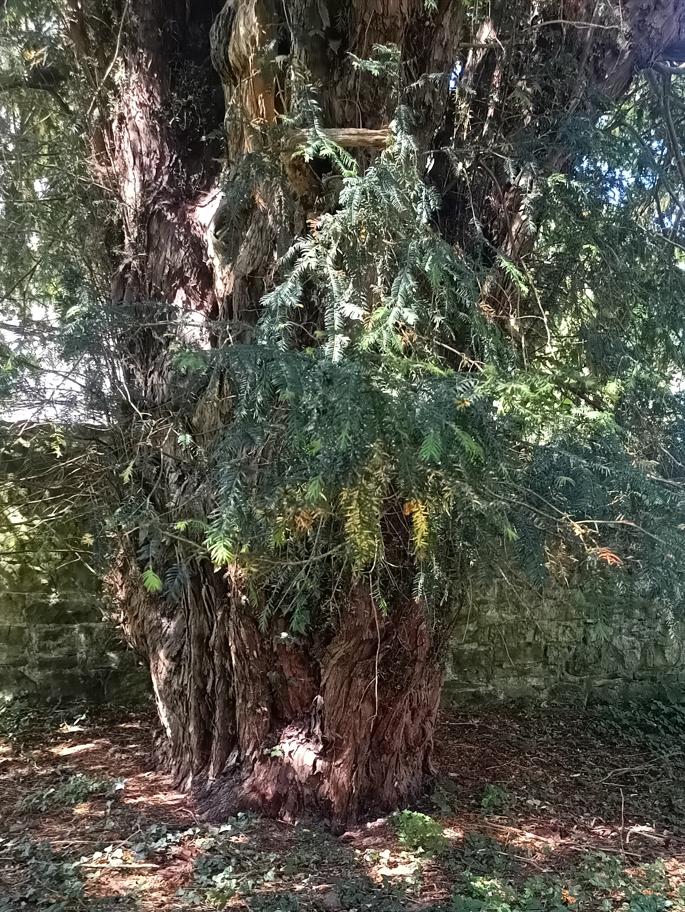
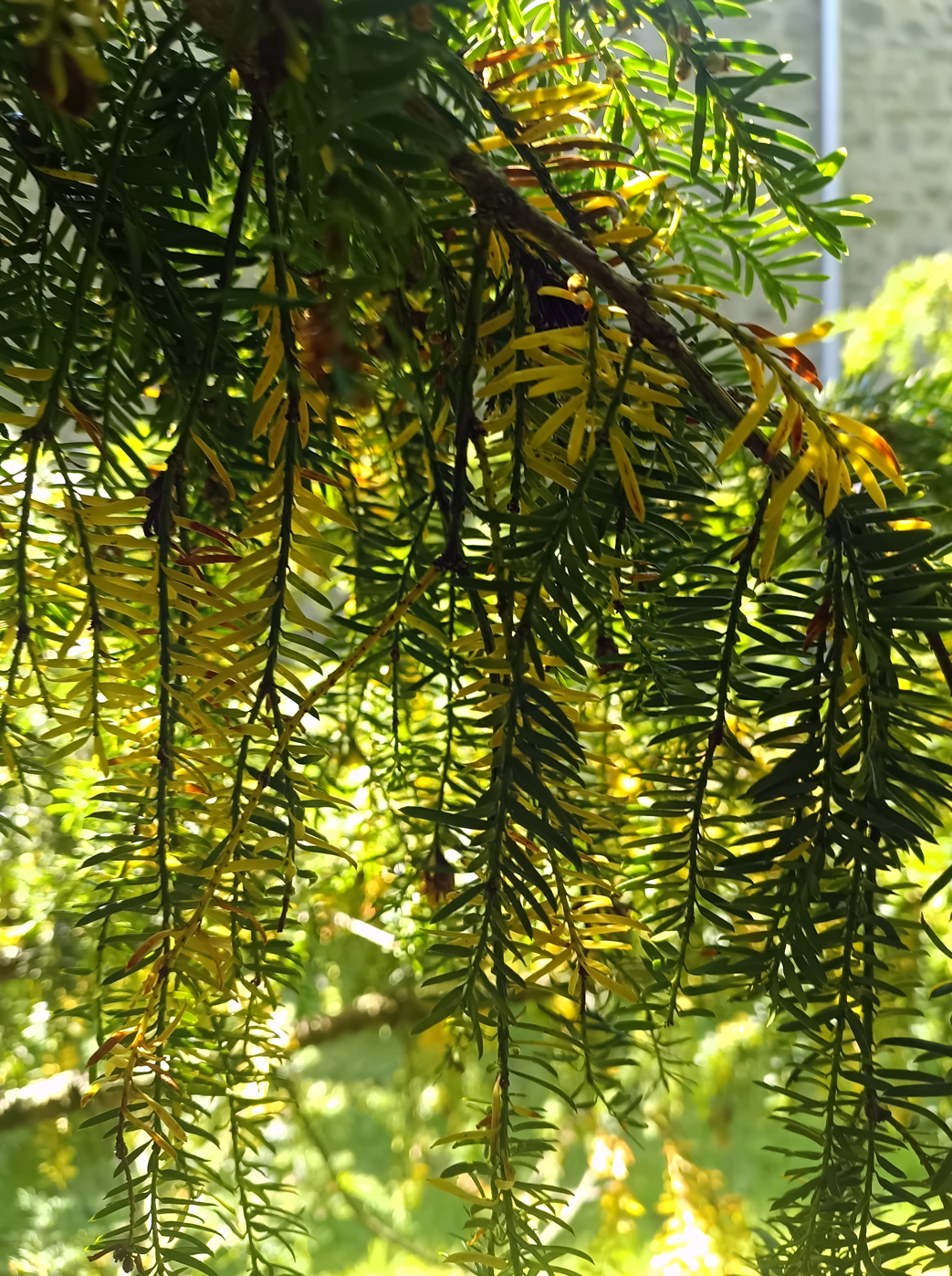
The Sacred Yew (to the north of the church) and Grandmother Yew (to the south of the church) are estimated to be around 2,500 years old. The Grandfather Yew (to the south west of the church) is estimated to be around 1,700 years old, around the same time the Romans left Vindolanda two miles to the north. A Roman altar found in the churchyard (and now in the Great North Museum), is dedicated to a presumed local goddess by the curia textoverdorum (congregation of weavers of green shoots). The name Beltingham is postulated to come from Beltane, the ancient name for May Day. These both illustrate the depth of time this place has been sacred to nature, something the former vicar Rev C W Herring described as “this haunt of ancient peace”.
The trees are currently at risk because:
- their ecology which has evolved over thousands of years with minimal disturbance, is not recorded;
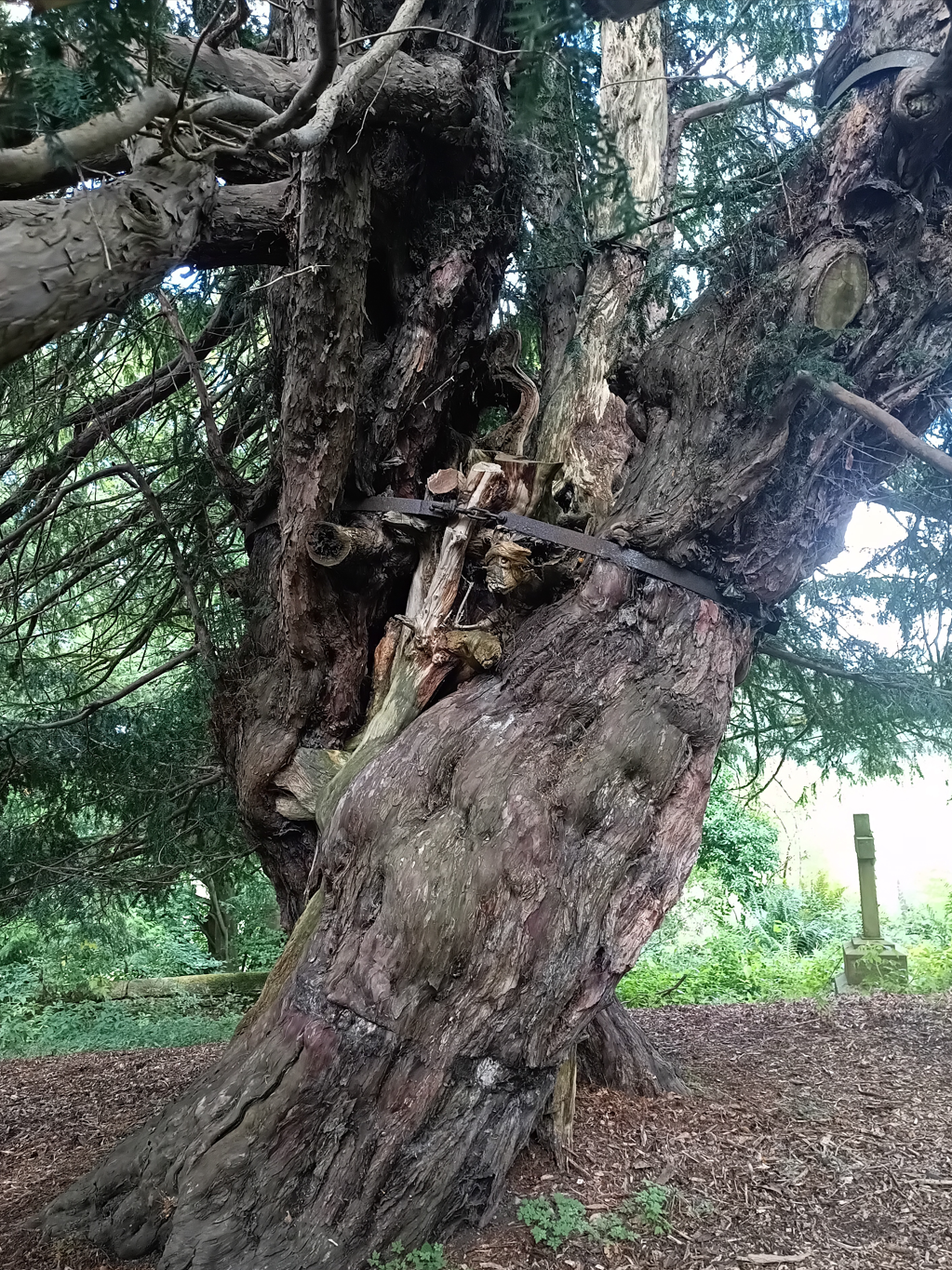
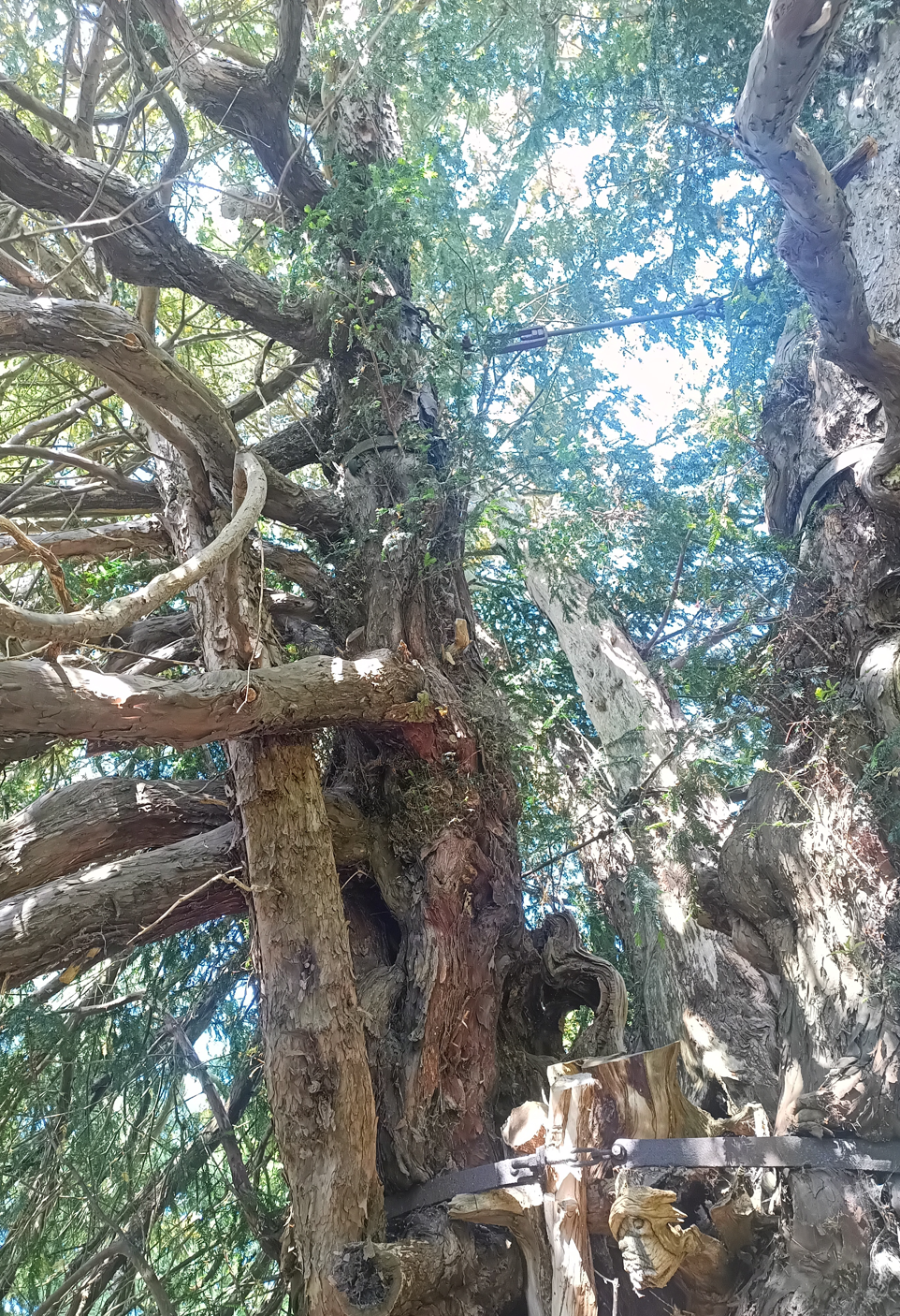
- the iron bands and chains supporting the trunk and limbs of the eldest, which are preventing it falling open and onto the grade 1 listed church, appear to be cutting off the flow of nutrients;
- the trees are far older and rarer than the 500 year old church building, and may mark the Centre of Britain for ancient peoples, embodying a spiritual connection to pre-Roman times, yet they have no legal protection;
- the church yard has recently closed for burials and management of the trees and grounds need to be passed on from the PCC, which is usually to the County Council, so there needs to be a comprehensive management plan in place for these important trees to safeguard their social, cultural and ecological value.
To address these, the project will likely have the following themes:
1 – ecological survey – full above and below ground, all season survey of flora, fauna and funga associated with the three trees and their largely undisturbed ecosystems.
2 – arboricultural architecture and biomechanics – structural survey of the trees and particularly the ironwork associated with ‘the sacred yew’.
3 – historical & archaeological research – collation and publication of the history of the yew tree as a species and in particular the history and archaeology of our three yew trees at Beltingham, and their setting next to the 500 year old church with Anglo Saxon roots
4 – social and cultural research – republishing and extending earlier community created compendiums (from 2007 and 2021), developing sustainable community participation in connecting with the yew trees, the church building, churchyard, and the sense of place “haunt of ancient peace”. Promoting a spiritual approach, and pedestrian pilgrim style walk accessible from Allen Banks (National Trust) car park, and Bardon Mill train station.
5 – training – working with arboriculture post-grad students, apprentices, and professionals through Myerscough College and the Arboriculture Association and Ancient Tree Forum’s VETcert CPD programme, as well as expert volunteer groups and citizen science involvement.
6 – protection – collate the information necessary for the three trees to swiftly acquire the highest level of appropriate legal protection, when it becomes available.
The main output of the project will be a comprehensive management plan, concerning the social, cultural and ecological values of the trees, which will be agreed by all of the interested expert and community stakeholders, before being negotiated within future maintenance contracts.
We also hope people will gently reclaim their connection with the Yews, perhaps visiting them on foot seeking spiritual solace and an environment conducive to meditation, taking part in a festival of nature and creativity perhaps at Beltane, attending a talk about our research findings, or taking part in ecological monitoring surveys.
 Yvonne Conchie